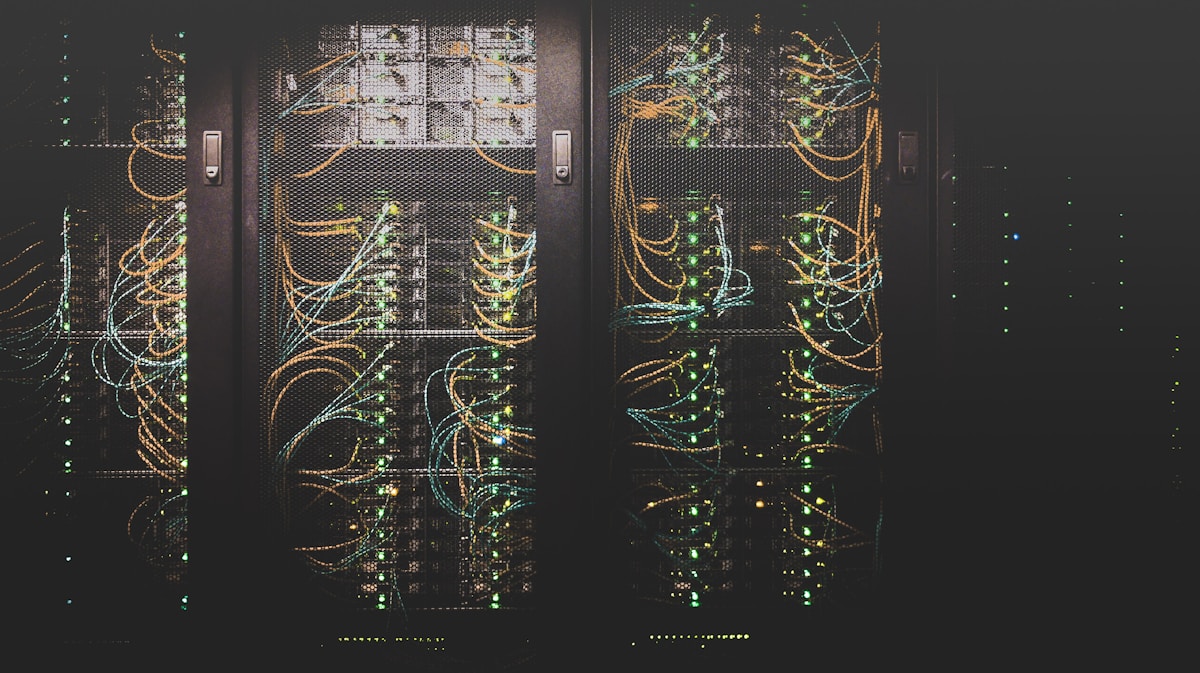

You approved the budget. You locked in the timeline. Six months later, your data center is sitting half-built because the power supply units haven't arrived. Sound familiar?
Most project managers and CFOs I talk to blame the supply chain. They point to semiconductor shortages, transformer lead times, and geopolitical disruptions. And sure, those are real. But here's what nobody's putting in the financial model: the cascading cost of those delays.
Three months of PSU delays doesn't just mean three months of delayed operations. It means stacked construction costs, penalty clauses, lost revenue, and a cascade of downstream decisions that compound faster than you can track them.

Key Takeaways
- PSU lead times have exploded from 8 to 36 weeks, and the domino effect on your project timeline is far more expensive than the hardware cost itself.
- Most organizations budget for the PSU unit price. Almost none budget for the idle crew cost, the land lease extension, the delayed lease-up revenue, or the financing carry cost that accumulates while the facility sits unfinished.
- Early procurement with specification buffers and alternative sourcing strategies can cut effective delay costs by up to 60 percent.
I spent the last few weeks digging into project timelines from three mid-tier data center builds and one hyperscaler expansion. The pattern is brutal and consistent. The teams that got burned weren't the ones with the worst suppliers. They were the ones who treated PSU procurement like a line item instead of a critical path driver.
The Delay Cost Multiplier Nobody Talks About
Let me walk you through a real scenario. A 50-megawatt data center project in the US Southeast. The budget had a $12 million allocation for power distribution infrastructure, including PSUs. Fair enough. The procurement team locked in orders at week 14 of a 72-week build. Or so they thought.
Those PSUs were supposed to arrive by week 28. They arrived at week 41. Eleven weeks late.
Here's what that looked like in actual costs:
- Extended construction financing: $2.4 million in additional interest during the delay period.
- Idle labor and equipment: $1.8 million in crane rentals, temporary power, and crew standby charges.
- Land and lease extensions: $900,000 in additional site lease payments while the build stalled.
- Delayed revenue: $14 million in foregone lease-up income from the customer who had already signed the letter of intent.
- Spec change rework: $600,000 in engineering changes forced by the alternative PSU being slightly different physically and electrically.
That $12 million PSU line item just became a $19.7 million problem. The delay didn't come from the hardware. It came from everything the hardware was blocking.
This is the cost multiplier. The PSU shortage is the trigger. But the bill arrives in every other department on your project.

Why PSU Lead Times Exploded (And Why They're Not Coming Back Down)
The short answer is AI demand. The longer answer is more useful for your procurement strategy.
Data center PSUs, especially the high-efficiency units required for modern 48V power delivery architectures, rely on a narrow set of components. Gallium nitride and silicon carbide semiconductors. Specialized transformer iron cores. Custom magnetics that can't be sourced from commodity suppliers. Each of these has its own capacity constraint, and none of them expanded fast enough to meet the AI-driven surge in demand.
According to industry data, US data center PSU procurement volume grew approximately 47 percent in 2024. That demand came almost entirely from AI training cluster deployments. The manufacturing base for these components is still sized for the pre-AI growth curve.
Lead times moved from 8 to 12 weeks before the current cycle to 24 to 36 weeks now. That's not a temporary spike. That's a structural capacity problem. Manufacturers can add capacity, but it takes 18 to 24 months to bring new production lines online for power electronics. Your project timeline is probably competing with projects that have 10 times your budget.
If you need more detail on the supply chain mechanics, check out our analysis on why PSU lead times exploded to 36 weeks. The bottleneck breakdown is eye-opening.
The Four Cost Centers Most Projects Miss
When I review delay damage reports from data center projects, I see the same three costs getting tracked. Financing, labor, and equipment. What I rarely see is the fourth category, and it's usually the largest.
1. The financing carry cost on unfinished capacity
Your construction loan doesn't pause because the PSUs are backordered. Interest compounds daily. For a $200 million project at 10 percent annual interest, each month of delay costs roughly $1.67 million in interest alone. That number scales with your leverage ratio, so if you're using mezzanine financing or preferred equity, the effective cost is even higher.
2. The customer confidence discount
Data center tenants sign leases based on delivery commitments. When you miss those dates, you're not just losing revenue from the delayed tenant. You're damaging your reputation in a market where delivery reliability is the primary differentiator. Several operators I spoke with reported having to offer rent abatement or upgraded specifications to retain tenants who were considering alternatives after delay notifications.
3. The redesign and compliance cost
When you substitute a different PSU model because your original is backordered, it's rarely a drop-in replacement. Physical dimensions differ. Electrical characteristics shift. Cooling requirements change. I saw one project where the alternative PSU required a complete redesign of the busway system and a reconfiguration of the emergency power off circuitry. That's not a change order. That's a three-week engineering pause with a team sitting idle.
4. The opportunity cost of delayed deployment
This is the one that keeps CFOs awake. Every week your data center sits unfinished is a week you're not serving the market. In the current environment, a fully operational 50-megawatt facility in a prime location can generate $10 million or more in annual recurring revenue. That means each week of delay represents roughly $190,000 in foregone revenue. Over an 11-week delay, that's over $2 million. Add in the fact that your competitor who delivered on time is now capturing that demand, and the cost compounds further.
For a deeper look at how power stack failures compound during these delays, read our piece on why data center power stacks are failing under modern AI workloads.
How to Protect Your Timeline (Without Overpaying)
I'm not going to tell you to just order earlier. Everyone knows that. The question is how, and the strategies that actually work are more nuanced than most project plans account for.
Strategy 1: Lock specifications early, lock hardware later
The biggest mistake I see is waiting until the design is complete to engage PSU suppliers. By then, you've committed to a specific model, and if that model has a 36-week lead time, you're already behind. Instead, define your performance requirements early, get qualification approvals from your design engineer, and place a non-binding reservation with multiple manufacturers. This gives you options when the real order placement happens.
Strategy 2: Build in specification flexibility
Design your power distribution architecture to accept a range of PSU form factors and electrical characteristics. This doesn't mean compromising on efficiency or reliability. It means ensuring that when you need to substitute, the substitution doesn't trigger a redesign. I've seen projects save weeks and hundreds of thousands of dollars simply by specifying acceptance criteria rather than a single part number.
Strategy 3: Consider the secondary market strategically
There's a growing market for surplus and refurbished PSUs, particularly from projects that were cancelled or had their specifications changed. The quality varies, and you need rigorous testing protocols. But for non-critical paths or backup units, this can be a viable option that cuts lead time from months to weeks. Just make sure your acceptance criteria are documented before you need them.
Strategy 4: Model the delay cost in your financial plan
This is the most important and most neglected step. Your project financial model should include a delay scenario that tracks the cascading costs I outlined above. Not just the PSU price difference. The financing, the labor, the lost revenue, the redesign. When your board or investors see the real cost of a 12-week delay, they'll support the upfront investment in early procurement and specification flexibility much more readily.
Here's a simple framework I use with project teams. Take your monthly burn rate during construction. Multiply it by the expected delay in months. Then multiply that by 2.5. That 2.5 factor accounts for the indirect costs, the opportunity cost, and the risk premium. It's not precise. But it's dramatically more accurate than budgeting for the hardware alone.
The Bottom Line
PSU delays aren't a procurement problem. They're a project strategy problem. The hardware is the tip of the iceberg. The real cost lives in the financing, the lost revenue, the redesign work, and the damaged customer relationships that accumulate while you're waiting.
The projects that are navigating this successfully share one trait. They treat PSU procurement as a critical path activity from day one, not a line item to be optimized at the bottom of the budget. They build flexibility into their specifications. They model the delay cost explicitly. And they engage suppliers before the design is frozen.
If you're planning a data center build in the next 12 to 24 months, start the PSU conversation now. Not when your foundation is poured. Not when your mechanical systems are installed. Now.
The teams that act on this now will have a significant advantage when the next wave of AI-driven demand pushes lead times even further out. The hardware shortage isn't going away. But the cost of being unprepared is entirely within your control.