

You ordered spot instances to cut costs. The prices dropped 60% overnight. So why is your bill higher than last month?
Here's what nobody tells you about carbon-aware spot pricing: the discount isn't free money. It's a signaling game between cloud providers and the power grid. When carbon intensity spikes, prices drop. When clean energy floods the grid, prices rise. You're not just renting servers. You're bidding on electricity quality.
Why Your Spot Instance Strategy Is Failing You
Most teams treat spot instances like a simple cost-cutting lever. They set a maximum price, spin up instances, and hope for the best. But carbon-aware pricing adds a new dimension. The cheapest instance today might cost more tomorrow when the grid goes dark.
Think about your last billing cycle. Did you notice price volatility tied to weather patterns? Cloud providers like AWS and Azure now publish carbon intensity data alongside spot prices. This means your instance cost fluctuates with the grid's carbon footprint, not just supply and demand.
The problem? Most FinOps teams track costs in isolation. They see a 40% discount and celebrate. They miss the carbon tax baked into that price. When renewable energy dips, spot prices spike. Your batch jobs suddenly cost more than on-demand instances in cleaner regions.
How Carbon-Aware Pricing Actually Works
Cloud providers are experimenting with dynamic pricing models that reflect real-time grid carbon intensity. Here's the framework most teams miss:
- Grid carbon intensity varies by region and time. A data center in Iowa running wind power costs less to operate than one in Texas burning natural gas during peak hours.
- Spot prices now include carbon premiums. When the grid goes dirty, spot prices rise even with available capacity. The discount shrinks or disappears.
- Clean energy surges create scarcity. When solar and wind flood the grid, providers charge more for spot instances. They're monetizing clean electricity availability.
This creates a paradox. The greenest regions become the most expensive for spot workloads. Your sustainability goals clash with your cost optimization strategy.
What Batch Processing Teams Need to Know
If you run ETL jobs, ML training, or batch analytics, this pricing model changes everything. Your workloads can shift in time and space. But shifting to cheaper regions might mean higher carbon intensity. The math gets complicated fast.
Here's what successful teams are doing differently:
- Build carbon-aware schedulers. Tools like Kubecost and CloudHealth now factor carbon intensity into spot bidding algorithms. They don't just hunt for cheap instances. They hunt for clean-and-cheap instances.
- Set dual thresholds. Configure your spot strategies to respect both price limits and carbon intensity limits. Your job might wait 20 minutes for a cleaner window instead of grabbing the dirtiest cheap instance available.
- Track total cost of carbon. Factor emissions into your FinOps dashboard. A $0.02/hour savings means nothing if your carbon offset costs $0.05/hour to compensate.
The teams winning at this aren't the ones with the cheapest spots. They're the ones who've decoupled their workloads from dirty grids without sacrificing performance.
The Hidden Risk: Unpredictability Beyond Price
Carbon-aware pricing introduces a new failure mode. Your spot instances don't just get interrupted by capacity shortages. They get interrupted by weather. A storm moving through the Midwest might trigger price spikes across multiple regions simultaneously. Your fallback on-demand instances in neighboring regions surge too.
This correlates availability with grid health in ways that break traditional spot strategies. You can't just spread across regions anymore. You need to spread across energy profiles. Pair a wind-heavy region with a solar-heavy region. When one gets dirty, the other stays clean. When one gets expensive, the other drops.
The infrastructure to support this is expensive. You're trading spot savings for multi-region orchestration complexity. The math only works if your workloads are truly interruptible and your carbon budget matters more than pure dollar savings.
Who Should Skip Carbon-Aware Spot Pricing
Not every team should jump on this trend. If your workloads need guaranteed availability or your carbon reporting is aspirational at best, stick to traditional spot strategies. The complexity cost outweighs the savings.
But if you're running large-scale batch processing, training ML models, or processing data pipelines where timing flexibility exists, carbon-aware pricing could cut your bills by 40-70%. The trick is treating carbon as a first-class constraint, not an afterthought.
Your cloud bill isn't just a function of compute hours anymore. It's a function of grid hours. The teams that figure this out early will have both lower costs and cleaner footprints. The teams that ignore it will keep chasing discounts that vanish when the wind stops blowing.
Key Takeaways
- Carbon-aware spot pricing ties discounts to grid carbon intensity, creating unexpected cost volatility.
- The cheapest spot instances often come from dirty grids; clean regions become expensive during renewable surges.
- Successful teams build carbon-aware schedulers with dual price and carbon thresholds.

Why Your Spot Instance Strategy Is Failing You
Most teams treat spot instances like a simple cost-cutting lever. They set a maximum price, spin up instances, and hope for the best. But carbon-aware pricing adds a new dimension. The cheapest instance today might cost more tomorrow when the grid goes dark.
Think about your last billing cycle. Did you notice price volatility tied to weather patterns? Cloud providers like AWS and Azure now publish carbon intensity data alongside spot prices. This means your instance cost fluctuates with the grid's carbon footprint, not just supply and demand.
The problem? Most FinOps teams track costs in isolation. They see a 40% discount and celebrate. They miss the carbon tax baked into that price. When renewable energy dips, spot prices spike. Your batch jobs suddenly cost more than on-demand instances in cleaner regions.
How Carbon-Aware Pricing Actually Works
Cloud providers are experimenting with dynamic pricing models that reflect real-time grid carbon intensity. Here's the framework most teams miss:
- Grid carbon intensity varies by region and time. A data center in Iowa running wind power costs less to operate than one in Texas burning natural gas during peak hours.
- Spot prices now include carbon premiums. When the grid goes dirty, spot prices rise even with available capacity. The discount shrinks or disappears.
- Clean energy surges create scarcity. When solar and wind flood the grid, providers charge more for spot instances. They're monetizing clean electricity availability.
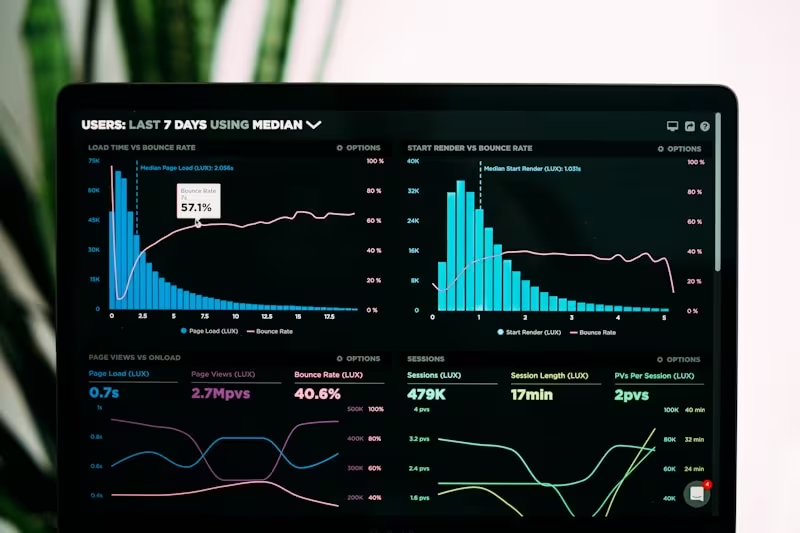
This creates a paradox. The greenest regions become the most expensive for spot workloads. Your sustainability goals clash with your cost optimization strategy.
What Batch Processing Teams Need to Know
If you run ETL jobs, ML training, or batch analytics, this pricing model changes everything. Your workloads can shift in time and space. But shifting to cheaper regions might mean higher carbon intensity. The math gets complicated fast.
Here's what successful teams are doing differently:
- Build carbon-aware schedulers. Tools like Kubecost and CloudHealth now factor carbon intensity into spot bidding algorithms. They don't just hunt for cheap instances. They hunt for clean-and-cheap instances.
- Set dual thresholds. Configure your spot strategies to respect both price limits and carbon intensity limits. Your job might wait 20 minutes for a cleaner window instead of grabbing the dirtiest cheap instance available.
- Track total cost of carbon. Factor emissions into your FinOps dashboard. A $0.02/hour savings means nothing if your carbon offset costs $0.05/hour to compensate.
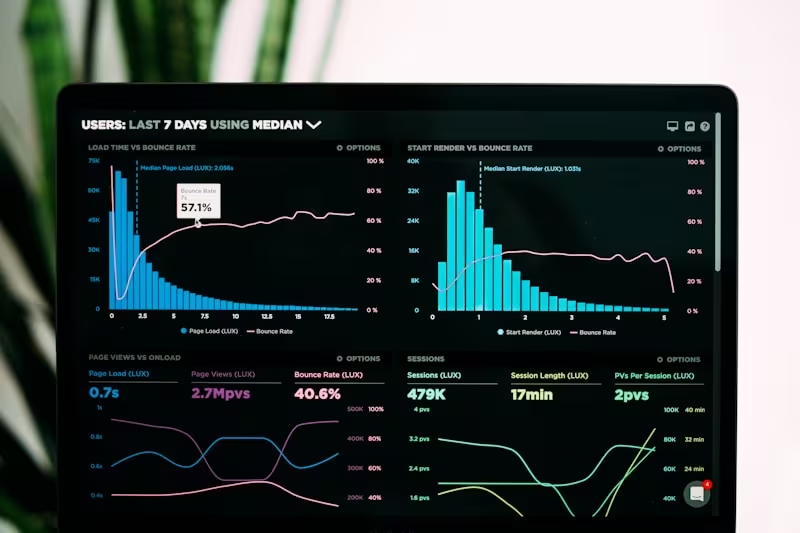
The teams winning at this aren't the ones with the cheapest spots. They're the ones who've decoupled their workloads from dirty grids without sacrificing performance.
The Hidden Risk: Unpredictability Beyond Price
Carbon-aware pricing introduces a new failure mode. Your spot instances don't just get interrupted by capacity shortages. They get interrupted by weather. A storm moving through the Midwest might trigger price spikes across multiple regions simultaneously. Your fallback on-demand instances in neighboring regions surge too.
This correlates availability with grid health in ways that break traditional spot strategies. You can't just spread across regions anymore. You need to spread across energy profiles. Pair a wind-heavy region with a solar-heavy region. When one gets dirty, the other stays clean. When one gets expensive, the other drops.

The infrastructure to support this is expensive. You're trading spot savings for multi-region orchestration complexity. The math only works if your workloads are truly interruptible and your carbon budget matters more than pure dollar savings.
Who Should Skip Carbon-Aware Spot Pricing
Not every team should jump on this trend. If your workloads need guaranteed availability or your carbon reporting is aspirational at best, stick to traditional spot strategies. The complexity cost outweighs the savings.
But if you're running large-scale batch processing, training ML models, or processing data pipelines where timing flexibility exists, carbon-aware pricing could cut your bills by 40-70%. The trick is treating carbon as a first-class constraint, not an afterthought.
Your cloud bill isn't just a function of compute hours anymore. It's a function of grid hours. The teams that figure this out early will have both lower costs and cleaner footprints. The teams that ignore it will keep chasing discounts that vanish when the wind stops blowing.